
Little Voice
Parshat Vayikra and the power of paying attention

As we open the book of Leviticus, let’s start with a tribute to IKEA, the apex of build-it-yourself furniture, and fount of a thousand memes about how hard it is to assemble. Here are a few favorites:
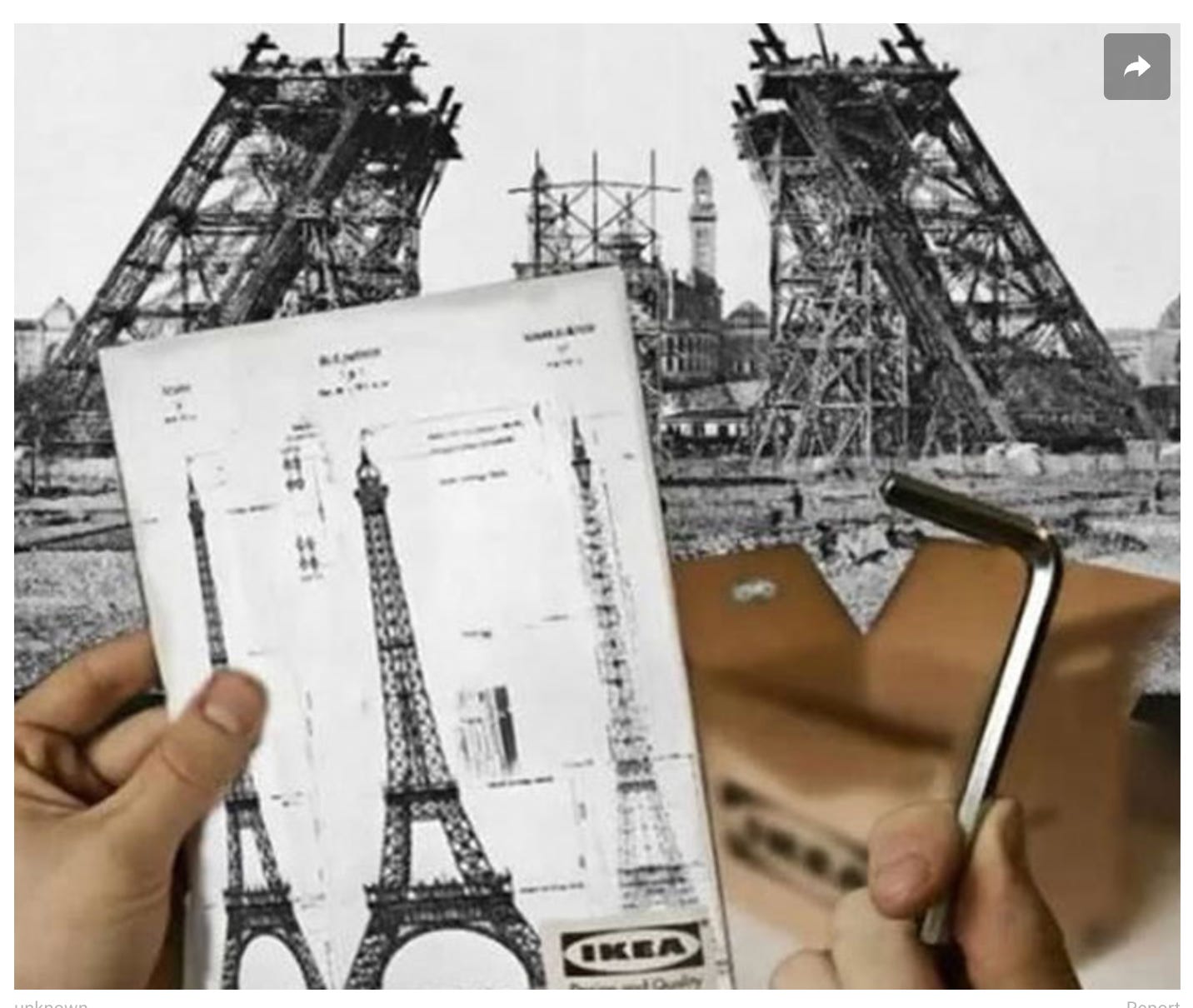
And this one:

And this….

A d’rash by IKEA would end here and leave it to you to make the meaning. But here at Talking Torah, we deliver them pre-assembled.
********************
As challenging assembly instructions go, IKEA still holds second place to the many chapters at the end of Exodus filled with the extensive instructions for the design and building of the Mishkan. At the end, finally, Moses sets up the structure and the furnishings:
In the first month of the second year, on the first of the month, ... Moses set up the Tabernacle, placing its sockets, setting up its planks, inserting its bars, and erecting its posts.

He spread the tent over the Tabernacle, placing the covering of the tent on top of it
—just as GOD had commanded Moses.
He took the Pact and placed it in the ark...and brought the ark inside the Tabernacle..and screened off the Ark of the Pact
—just as GOD had commanded Moses.
And he lit the lamps before GOD
—as GOD had commanded Moses.

And so on…
The persistent motif is that Moses did all of the work “just as God commanded.” He did exactly as he was asked and it wasn’t easy. After the exhausting work of building this glorious space, we imagine Moses sitting there awaiting the payoff - that he might get to see God. But no:
Moses could not enter the Tent of Meeting, because the cloud had settled upon it and the Presence of God filled the Tabernacle.
It must have been agony for Moses. He built it and can’t even enter.
And so the book of Exodus ends, with Moses on the outside, waiting.
*******************
Now to the beginning of Leviticus. Here are the opening words:
וַיִּקְרָ֖א אֶל־מֹשֶׁ֑ה וַיְדַבֵּ֤ר יְהֹוָה֙ אֵלָ֔יו מֵאֹ֥הֶל מוֹעֵ֖ד לֵאמֹֽר׃
God called to Moses and spoke to him from the Tent of Meeting, saying:
We’ve discussed scribal anomalies before and this verse has a classic example in the first word, Vayikra, which means “And God called”:
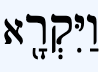
What is the meaning of this little Aleph, so carefully carried forward from scroll to scroll by the scribes?
Vayikra is a hand off. Until now, in his generation Moses has been the exclusive interlocutor with God. That is about to change. Moses will continue to have an intimate relationship with God but no longer exclusive. Aaron, his sons and the other Priests will also be close to God. And only Aaron will have the privilege of stepping behind the curtain to be in the presence of the Ark of the Covenant.
So what will this new phase look like? We see it in the manner of God’s first call to Moses from Mishkan, which opens Leviticus. It will not always be the thunderous voice of Sinai. Sometimes it will be the faintest sound emanating from The Tent of Meeting, symbolized by that small, vowel-less aleph. It is, we notice, a subtle call, like the Burning Bush.
Sometimes all it takes is noticing.
**************
Getting in touch with the Divine works just like that for me. Sometimes I really work at setting it up - I don the prayer shawl, fluff up the meditation pillow and summon my intention to be present with … whatever. But then my mind wanders. (That’s a slight misstatement because it implies my mind was there to begin with.) Maybe after a while a phrase from the prayers, or one of those commentaries “below the line”, will call to me, a little aleph.
But you can’t force these serendipitous visits. Prepare as you will, but so often it’s the accidental encounters where God appears. I see a sparrow forage and take flight, a blade of grass in its beak, the admirable little fellow off to build his sanctuary for the season.
And just like that, there it is, a little aleph. A little nothing. Just enough.
And another thing…
We see this fully assembled in the poem Primary Wonder by Denise Levertov, which captures the sudden appearance of the mystery:
Primary Wonder
Denise Levertov

Days pass when I forget the mystery.
Problems insoluble and problems offering
their own ignored solutions
jostle for my attention, they crowd its antechamber
along with a host of diversions, my courtiers, wearing
their colored clothes; cap and bells.
And then
once more the quiet mystery
is present to me, the throng's clamor
recedes: the mystery
that there is anything, anything at all,
let alone cosmos, joy, memory, everything,
rather than void: and that, O Lord,
Creator, Hallowed One, You still,
hour by hour sustain it.Shavuah tov,
Rich